

Top Localization Trends to Follow in 2026: Beyond AI and Automation
Localization is no longer just the final step that happens after a product, campaign, or website is done. In 2026, it has become one of the ways brands grow, compete, and stay relevant in markets where customers expect more than translated words. And this is exactly why localization trends are becoming so interesting. On one side, we have AI localization tools, automation, continuous localization, and increasingly advanced desktop publishing workflows. On the other, we have something much more human: memory, emotion, culture, and belonging. In this article, we will explore the top localization trends shaping global content in 2026: the growing role of AI and human expertise, and the shift from translation to cultural adaptation. We will also look at why nostalgia has become one of the most powerful localization tools for modern brands, and how companies can use it without turning global campaigns into one-size-fits-all memories. And if you still cannot put your mind on how Shrek and a legally blonde Harward student are associated with one of the most mesmerizing localization trends of this year, you better be reading along!
- Localization vs. Translation: What Is the Difference?
- Why Localization Is Becoming a Growth Strategy
- Localization Services for US Companies: Why English Is Not Enough
- Localization Trends 1: AI vs. Human Expertise
- Localization Trends 2: From Translation to Cultural Adaptation
- Localization Trends 3: Everything New Is a Well-Forgotten Old
- Localization Trends 4: Continuous Localization
- Localization Trends 5: Human-Led Localization Services Still Lead
- From Localization Trends to Outcomes
Localization vs. Translation: What Is the Difference?
Translation and localization are often used as if they mean the same thing. But in fact, they do not, and here is why.
Translation is the process of converting text from one language into another. It focuses on meaning, grammar, accuracy, and fluency. A translated product description, app interface, user manual, or landing page must deliver the same core message as the original. Meanwhile, localization goes further. It adapts content, design, tone, visuals, formatting, user experience, cultural references, and even product presentation for a specific market, target audience, or even age group. A simple example showcasing the difference between translation and localization looks like this:
- German - English Translation: Jetzt kostenlos testen — Test now for free.
- German - English Localization: Jetzt kostenlos testen — Start your free trial.
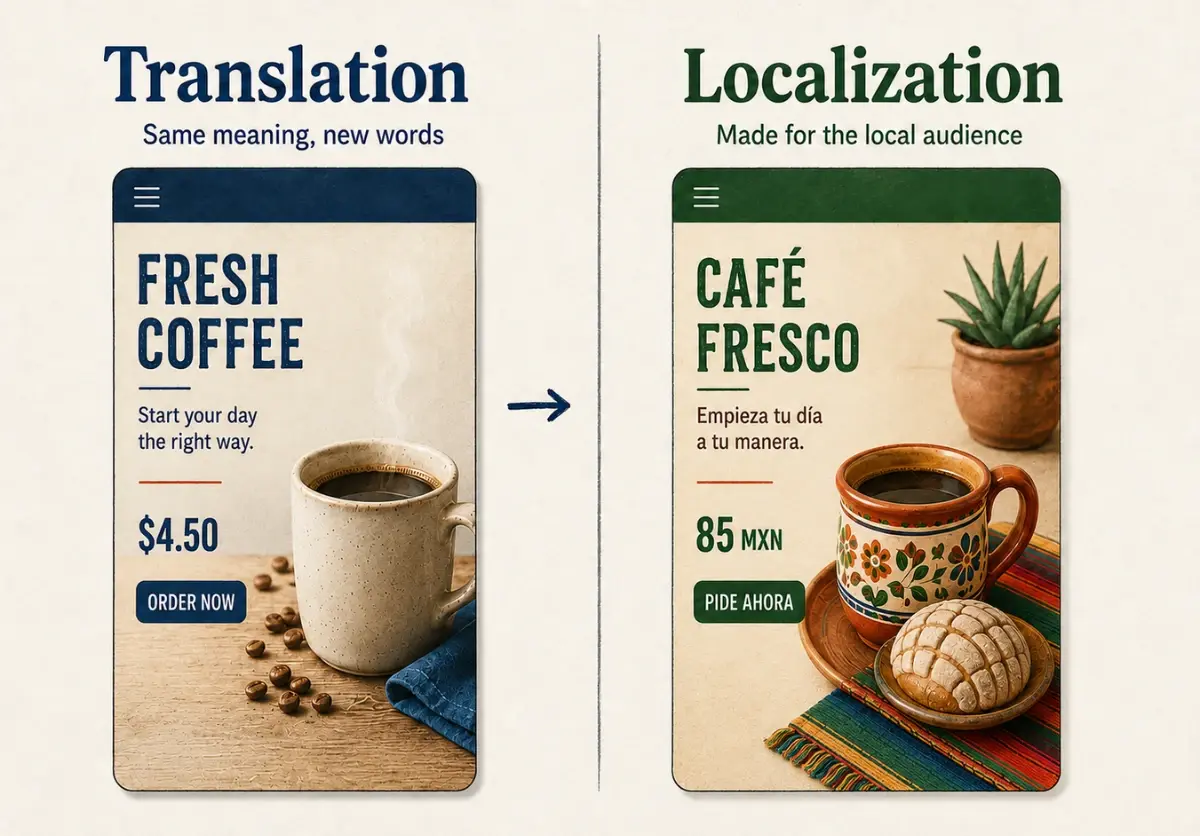
Furthermore, that difference is becoming more important in 2026. Global customers do not simply expect brands to speak their language. Instead, they expect brands to understand their context, cultural peculiarities, and even local humor. A website or a software interface can be translated and still feel foreign or confuse the user. And localization serves to let these things feel natural and effortless to process by your end audience.
This is why modern localization is no longer limited to text. It now also includes multilingual SEO, desktop publishing, local UX, AI localization tools, linguistic quality control, multimedia adaptation, cultural review, and post-launch optimization.
Why Localization Is Becoming a Growth Strategy
For long enough, localization was treated as a final step before entering a new market. A company would build the English version first, then translate it when expansion became necessary. However, that approach is quickly becoming outdated. In 2026, localization is a growth strategy because it directly affects market entry, customer trust, conversion rates, support costs, product adoption, and brand perception. Companies that localize well can move into new regions faster, reduce friction for customers, and compete against local players more effectively.
This is especially true for SaaS, eCommerce, healthcare, fintech, education, gaming, entertainment, travel, manufacturing, and technical documentation. In each of these industries, language is only one part of the experience. Customers also need familiar formats, relevant examples, clear instructions, local terminology, and content that exactly matches their expectations.
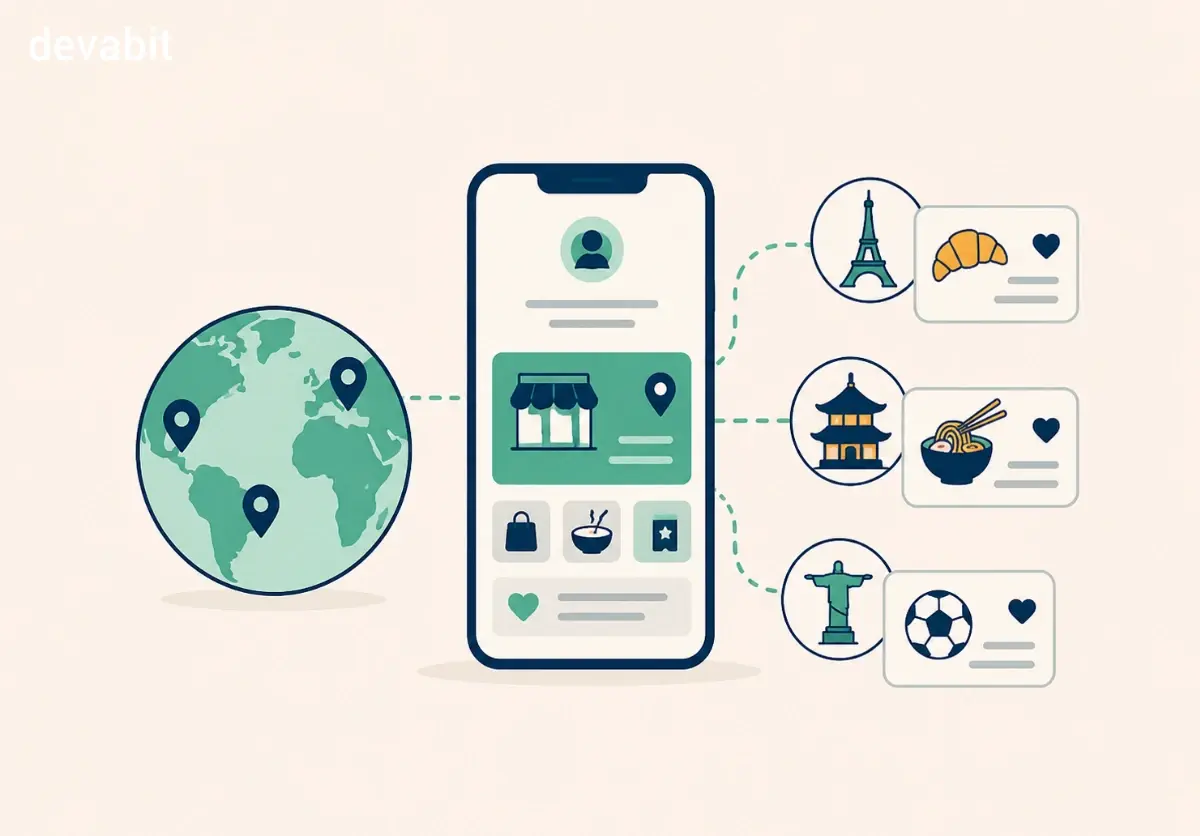
Let's take a look at a localization strategy from Netflix's perspective. Its global growth depends not only on translating subtitles, but on giving viewers more control over dubbing and subtitle combinations. In 2025, Netflix expanded TV language options so users could access the full list of available subtitles and dubbing languages for a title, instead of seeing only a small set based on location and settings. That is localization as product experience, not just translation.
The same logic applies outside entertainment. A software company expanding from the US into Germany, Japan, or Mexico needs more than translated buttons. It also needs localized onboarding, support content, pricing pages, product terminology, legal notices, date formats, and search-optimized landing pages. Good localization makes a product easier to choose, easier to use, and easier to trust.
If localization is becoming part of your growth strategy, devabit can help you build the right workflow from the start. Our team supports localization, desktop publishing, multimedia adaptation, and quality assurance, so your multilingual content is not only translated, but ready to perform in real markets.
Localization Services for US Companies: Why English Is Not Enough
Many US companies think about localization only when they expand internationally. Unfortunately, that is a mistake. To begin with, the United States itself is a multilingual market. According to Census-based reporting, nearly 22% of US residents aged five and older speak a language other than English at home. That share has doubled over the past 40 years. Spanish is the most common language after English, but the US market also includes large communities speaking Chinese, Tagalog, Vietnamese, Arabic, French, Korean, and many others.
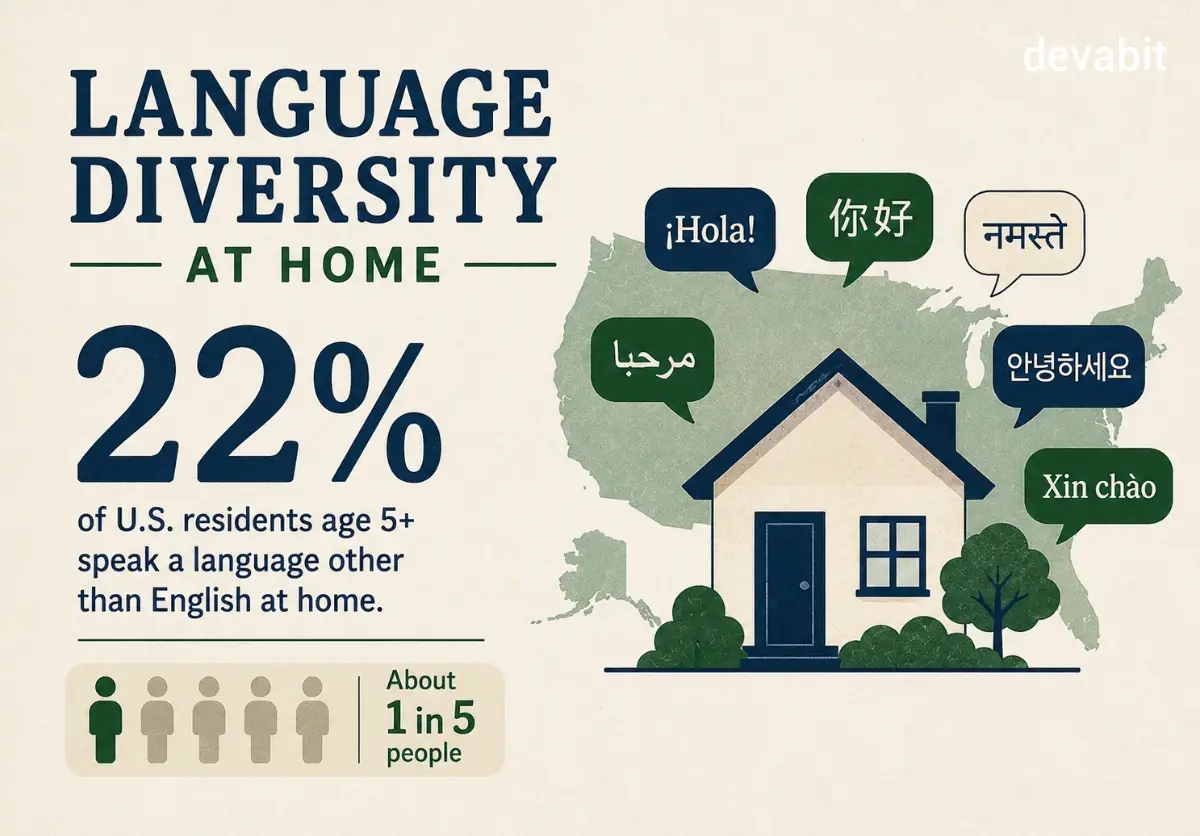
This means English-only content can limit reach even before a company enters another country. For US companies, localization services can support several growth goals. Multilingual localization services can help reach domestic multilingual audiences. This expansion specifically matters in healthcare, public services, insurance, education, retail, finance, and eCommerce, where clarity can directly affect trust and decision-making. Secondly, they can prepare companies for international expansion. A US SaaS company, for example, may use localization to test demand in Spanish-speaking, German-speaking, or Japanese-speaking markets before opening a local office.
Of course, high-quality localization services can significantly improve customer experience. Localized support articles, training materials, manuals, and onboarding flows reduce confusion and help customers succeed faster. And finally, they can protect brand credibility. Poor localization can make a serious company look careless. In regulated industries, it can create even bigger risks for your reputation.
And next time you think the US market is not the place for multilingual localization services, your company may lose over 68 million potential customers and users.
If English-only content is limiting your reach, it may be time to localize your materials for the audiences you already have and the markets you want to enter next. devabit helps companies adapt websites, documentation, training materials, marketing assets, and product content with accuracy, cultural awareness, and production-ready formatting.
Localization Trends 1: AI vs. Human Expertise
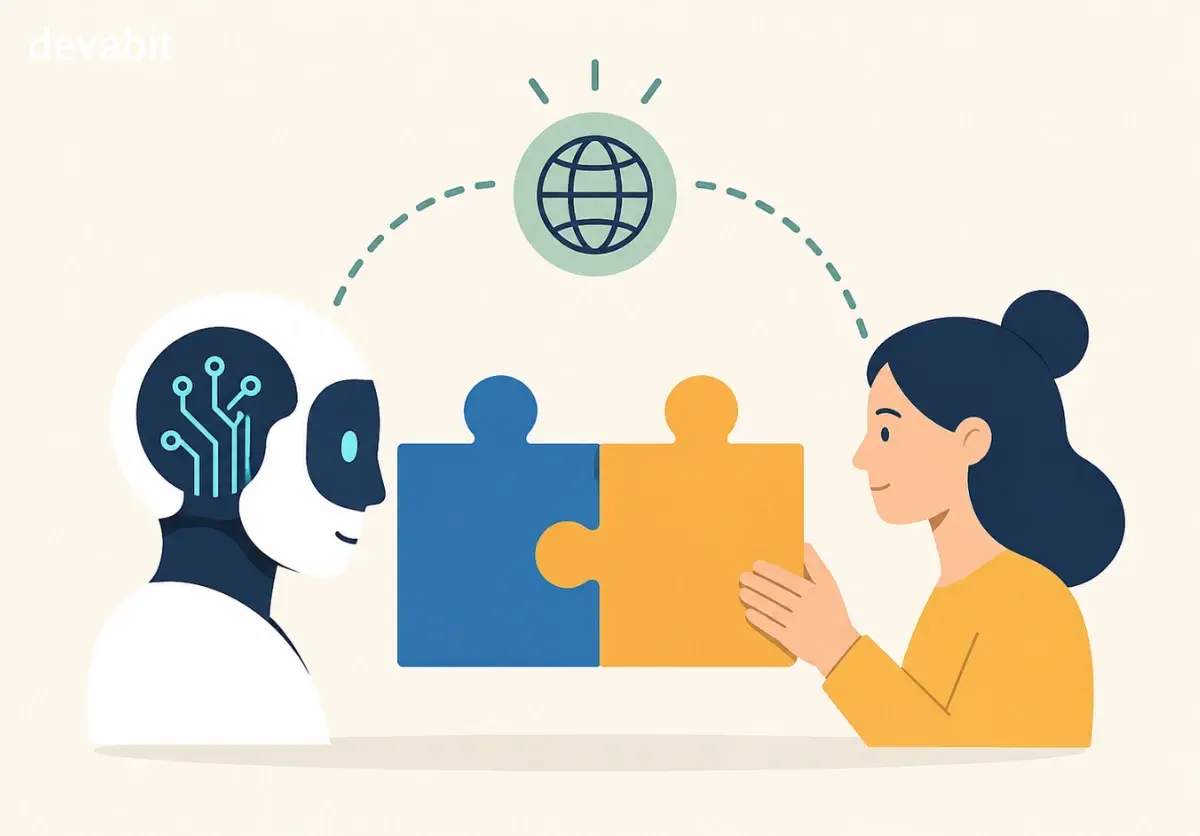
We simply cannot deny that AI is one of the most visible localization trends in 2026, but the real story is not AI replacing humans, but about changing how localization teams now work. Let's get into it.
AI localization tools can translate large volumes of content quickly, generate first drafts, suggest terminology, support post-editing, and help teams handle repetitive content at scale. For product teams, this AI-powered approach can significantly speed up software releases. For eCommerce brands, it can help localize thousands of product descriptions at once. And for media companies, it can support subtitles, transcripts, and multilingual content pipelines effortlessly.
Some of the best AI localization tools to mention include Phrase, Lokalise, Smartling, Transifex, Crowdin, Smartcat, and DeepL, with Phrase and Lokalise being especially useful for software and product localization, Smartling for enterprise translation workflows, Smartcat for AI-assisted global content production, and DeepL for high-quality machine translation support.
Recent industry reporting shows how quickly AI is reshaping translation work: 63% of freelance translators reported using AI-powered translation tools. At the same time, only 41% of freelancers said they saw a financially sustainable future in the profession, compared with 64% in 2023. That tension explains the current state of the industry: AI is useful, disruptive, and impossible to ignore.
But AI still has limits. It can miss emotional nuances, flatten brand voice, misunderstand humor, or struggle with legal, medical, financial, or technical details. That is why the best localization workflows use AI and human expertise hand-in-hand. AI handles speed and scale, and human linguists, editors, reviewers, and localization specialists handle context, accuracy, culture, tone, and quality.
Webtoon offers us a useful example of these localization trends. In 2026, the platform announced AI-powered localization tools for Canvas creators, allowing scripts to be localized into languages such as English, Spanish, French, Indonesian, Thai, Traditional Chinese, and German. But the tool is optional, includes glossary support for consistency, and allows reported issues to trigger human quality review. That is exactly where AI localization trends are heading: AI-assisted, but not blindly automated.
Summing up, AI localization tools are currently the elephant in the room. However, while some decide to still ignore or exploit it, others utilize AI in localization to get a competitive advantage over purely manual localizers. The key to succeeding in localization trends 2026 lies in figuring out that golden mean between high-quality human expertise and AI-driven automation.
Localization Trends 2: From Translation to Cultural Adaptation
Another major shift in localization trends of 2026 is the move from simple translation to cultural adaptation. Brands are realizing that accurate language is not enough. A message has to fit the local market. That includes tone, humor, visuals, examples, buying habits, product expectations, and cultural references.
McDonald's is one of the clearest examples of localization in practice. The company does not simply translate menus. Instead, it adapts products to local tastes and then sometimes turns those local adaptations into global marketing opportunities. In 2026, McDonald's Australia launched a limited-time "Menu Heist" range featuring popular items from Japan, Canada, the UK, and the US, including a Teriyaki Chicken Burger and Garlic and Black Pepper McNuggets from Japan. The campaign worked because customers were already interested in international McDonald's menu culture.

That is the true cultural adaptation in action. The same principle applies to digital products and B2B content. A US cybersecurity company entering the Japanese market may need a more formal tone, localized examples, and region-specific compliance references. A healthcare company serving Spanish-speaking patients in the US may need culturally appropriate visuals, plain-language content, and careful terminology. The best localization examples show that people respond to content that feels made for them, not merely converted.
Localization Trends 3: Everything New Is a Well-Forgotten Old
One of the most interesting localization trends in 2026 has nothing to do with new technology. It is about your old emotions and nostalgia, to be precise.
Brands are bringing the past back again and again: movie sequels, remakes, legacy franchises, retro packaging, Y2K fashion, old mascots, vintage gaming aesthetics, classic menu items, and campaigns built around childhood memories. At first glance, this may look like simple nostalgia marketing. But from a localization perspective, it reveals something deeper: nostalgia is one of the most powerful forms of cultural adaptation.
The key catch is that nostalgia is never universal. A brand cannot assume that the same reference will trigger the same feeling in every market. One audience may see a retro character and remember childhood comfort, another may see nothing at all, and a third may associate the same symbol with an entirely different political, cultural, or emotional context. That is why nostalgia-driven localization requires more than translating old slogans, but also understanding which memories belong to which people.
Barbie is a perfect example. The 2023 movie turned a legacy toy brand into a global cultural event, supported by pink-heavy brand collaborations, retail partnerships, fashion moments, and a wave of Barbiecore aesthetics. For many Western audiences, Barbie carried decades of childhood memory, irony, aspiration, and cultural debate. But the same nostalgia did not travel equally everywhere.

In South Korea, the film underperformed compared with its global success, partly because Barbie did not have the same cultural weight as a childhood icon and because the movie's American feminist satire did not land the same way. The entertainment industry is built on the same logic. Sequels, reboots, cinematic universes, and remakes reduce risk because audiences already recognize the story world. Inside Out 2, Deadpool & Wolverine, Moana 2, Beetlejuice Beetlejuice, Wicked, Shrek 5, Elle, Sonic the Hedgehog 3, and many other recent hits show how strongly the market responds to familiar IP.
But global success still depends on localization. A sequel may bring built-in awareness, but dubbing, subtitles, voice casting, humor, cultural references, titles, posters, and platform promotion all shape how that familiar story feels in each country. Even design trends are part of this wave. Y2K fashion, pixel art, old-school gaming visuals, VHS textures, retro fonts, vinyl culture, and 1990s/2000s internet aesthetics are being reused by brands to feel emotional, playful, and human in an over-automated world.
But again, localization matters. Retro does not mean the same thing everywhere. For US millennials, early-2000s nostalgia may mean flip phones, mall culture, teen movies, and MySpace-era design. For Gen Z, it may mean 2016 Instagram, Vine, Snapchat filters, and pre-AI internet culture. This is why nostalgia is becoming a serious localization strategy. It helps brands connect with people through shared memory, even including nostalgic phrases, colors, fonts, and symbols.

Localization Trends 4: Continuous Localization
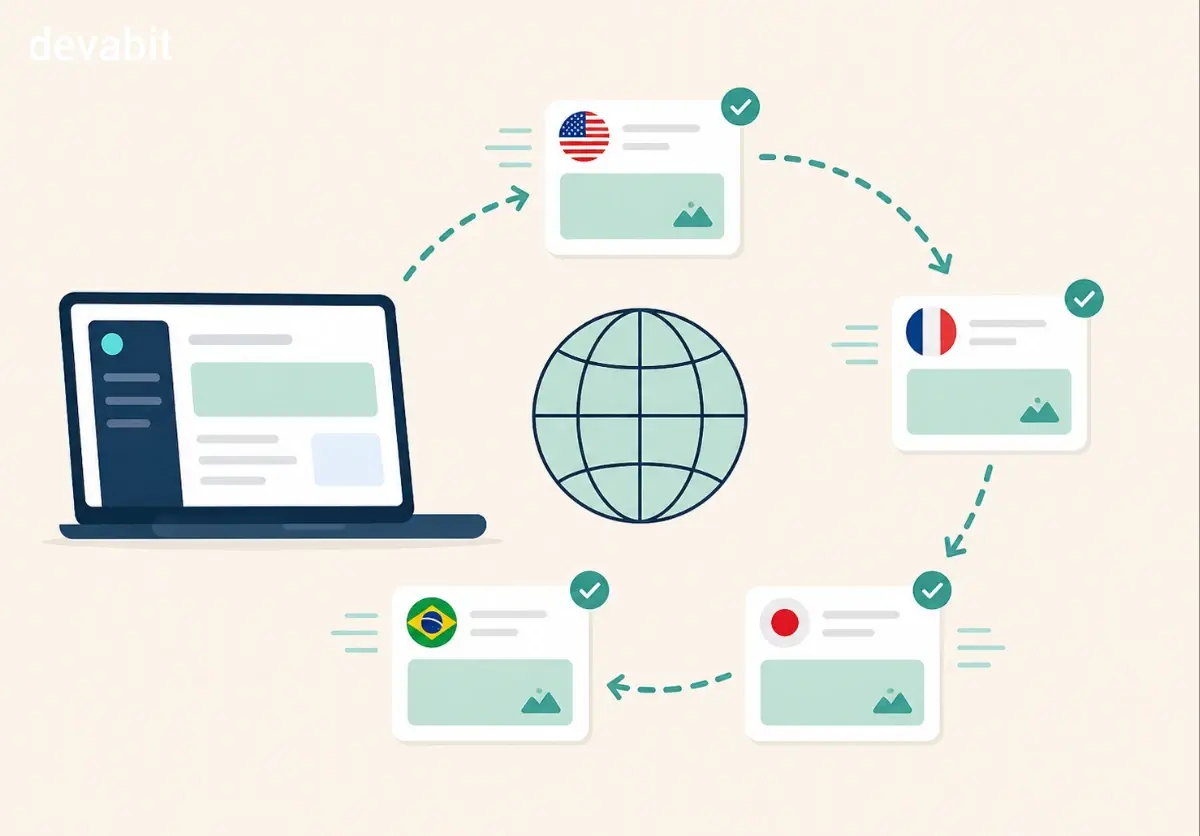
Continuous localization is becoming one of the most important localization best practices for modern companies. Previously, localization happened in large batches. A company would finish a website, product, manual, or campaign, then send everything for translation. That worked when content changed slowly. However, it does not work well in 2026.
Today, content is constantly changing. SaaS companies release product updates every week, eCommerce brands update catalogs, promotions, and product pages daily, and help centers grow as new customer questions appear. Continuous localization solves this by making localization part of the everyday workflow. Instead of waiting until the end, companies connect localization software to their product, CMS, design, and development tools. New strings, pages, or assets enter the localization process as they are created. Translators, reviewers, designers, developers, and QA teams can work in parallel rather than waiting for a final handoff.
For software companies, this reduces release delays. For marketing teams, it keeps multilingual campaigns aligned. And for support teams, it helps customers in different markets receive updated information at the same time. Continuous localization also significantly improves quality because teams can catch issues earlier. Text expansion, broken layouts, inconsistent terminology, missing translations, and formatting errors are easier to fix before launch than after customers see them.
Localization Trends 5: Human-Led Localization Services Still Lead
AI localization tools are getting better, desktop publishing software is becoming more advanced, and workflows are becoming more automated. Yet, human-led localization services still matter. In fact, they may matter more than ever. As companies produce more multilingual content, they need experienced people to decide what level of localization each content type requires. Not every asset needs the same workflow. A low-risk internal update may be suitable for AI translation with light post-editing, and a legal document, healthcare guide, product launch campaign, or high-converting landing page needs expert human review.
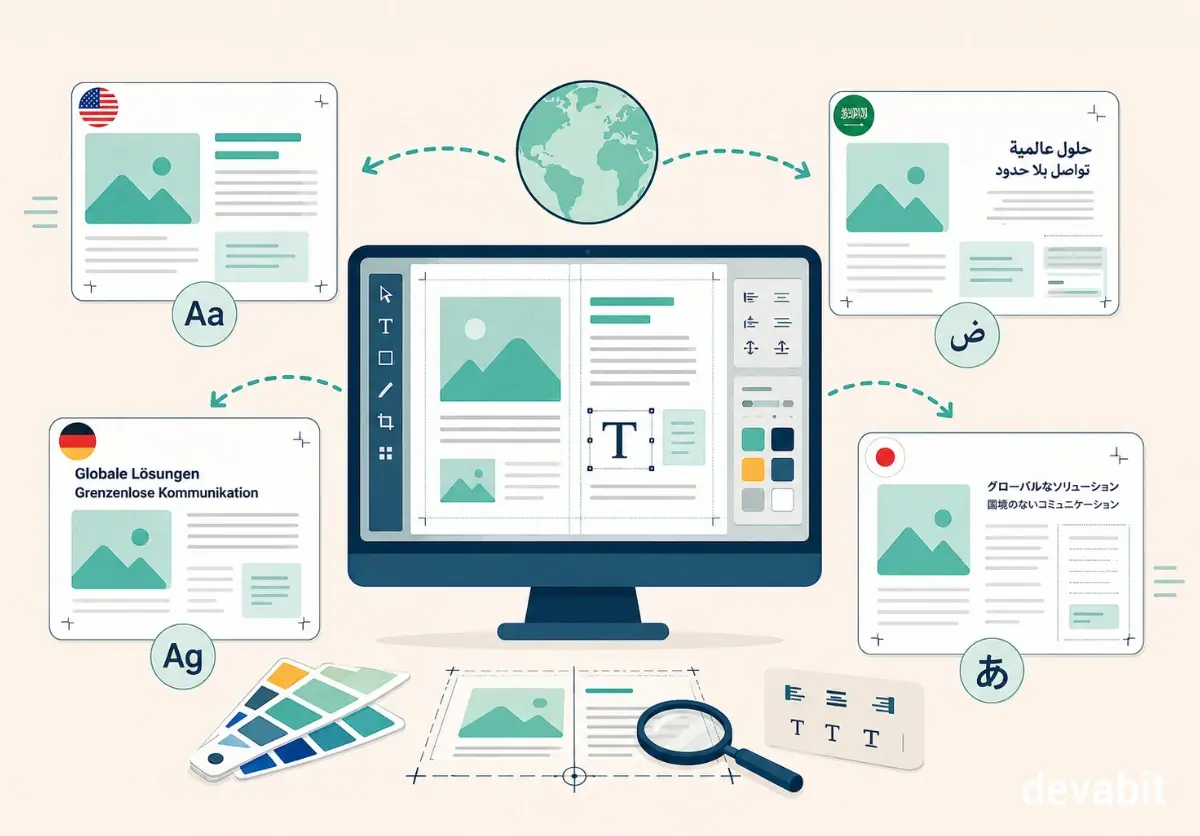
Human-led localization services help companies make those decisions. They also protect against mistakes that automation may miss, such as inconsistent terminology, incorrect units, broken variables, cultural mismatch, poor formatting, unclear instructions, and content that sounds translated rather than natural. This is exactly where devabit brings the most value. Our desktop publishing and localization expertise covers the parts of localization that are often invisible until they fail. Our teams help companies avoid common issues by combining localization expertise, desktop publishing, multimedia engineering, and linguistic quality assurance into one practical workflow. With devabit DTP services, localized content is brought back into its final format with care and precision.
Our teams work with multilingual documents, presentations, brochures, manuals, e-learning materials, on-screen text, graphics, and multimedia assets to make sure the final version is not only translated, but polished, readable, and ready to use. That is why choosing devabit means choosing more than a localization vendor.
From Localization Trends to Outcomes
The top localization trends in 2026 all point to the same conclusion: localization is becoming more strategic, more technical, and more connected to business growth. AI localization tools are making multilingual content faster to produce. Cultural adaptation is helping brands feel more relevant in each market. Continuous localization is keeping global content aligned with fast-moving product and marketing cycles. But still, human-led localization services are keeping quality, tone, and trust at the center. And while some companies consider AI localization tools will substitute human expertise real soon, others do not neglect the manual approach, nostalgic symbolism, and converting the old techniques into brand-new user journeys. And if you came here to figure out how to move from top localization trends to real customers converted to income, you are in the right place. As an expert desktop publishing and localization company, devabit helps clients all across the world localize various content for customers with the most diverse needs and expectations. Click here to learn more about our DTP & Localization experience, and Contact Us to request a free quote for your project now.
Recent Publications
Don't miss out! Click here to stay in touch.
More of DTP Content

Relevant Articles View all categories
View all categories CONNECT WITH US WE’RE READY
TO TALK OPPORTUNITIES
THANK YOU! WE RECEIVED YOUR MESSAGE.
Sorry
something went wrong