

Edge AI in Healthcare Explained from Head to Toe
It is almost impossible to deny that the healthcare industry is undergoing a revolutionary transformation, fueled by advancements in Artificial Intelligence (AI). And among the most exciting developments, Edge AI definitely stands apart. A technology that brings AI-driven data processing closer to the patient, enabling real-time decision-making at the point of care. This shift is reshaping how medical devices, wearables, and telemedicine platforms function, making healthcare smarter, faster, and more personalized. In this article, we will explore the concept of Edge AI in healthcare, detailing how it works, where it is being applied, and why it is becoming an essential component of modern healthcare systems. Let's end the debate and find out if Edge AI is only a buzzword or our next must-have feature in a manipulation room.
In short, below we will explore the following topics:
- Tech companies, such as devabit, define Edge AI in healthcare as deploying AI algorithms on local "edge" devices, like sensors, IoT devices, or gateways, so they can process data in real time without constant cloud access.
- Edge AI refers to the practice of processing data on local devices or edge computing systems instead of relying on remote servers or cloud-based systems. By enabling AI algorithms to run directly on medical devices, sensors, or wearables, Edge AI allows healthcare systems to make real-time decisions without needing to send sensitive data to the cloud, offering both speed and privacy benefits.
- About65% of US hospitals use AI-assisted predictive models, mainly to predict inpatient trajectories (92%), identify high-risk outpatients (79%), and help with scheduling (51%).
- Where is AI used in healthcare? AI in healthcare is used for tasks such as medical imaging, patient monitoring, drug discovery, and clinical decision support. AI algorithms help healthcare professionals diagnose diseases faster, predict patient outcomes, and improve treatment plans.
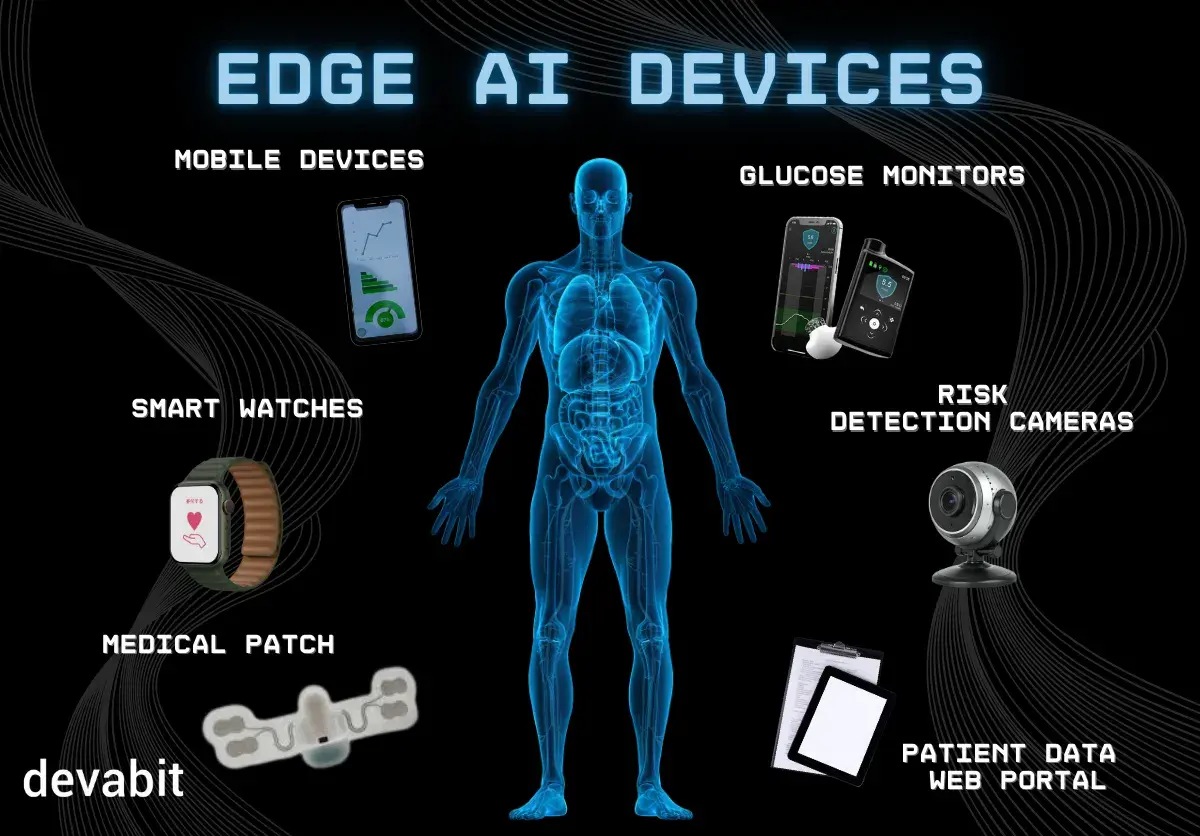
- What are the examples of Edge AI devices? Edge AI devices examples include:
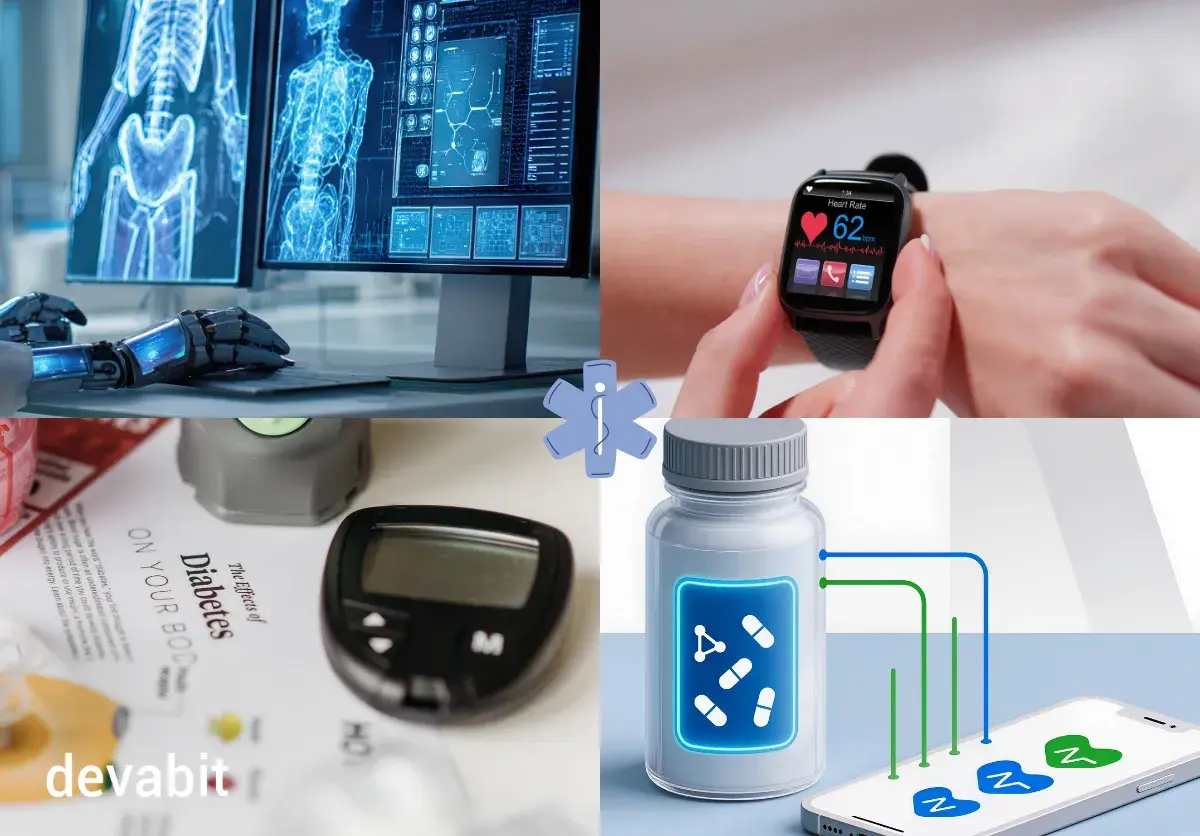
- Smartwatches that monitor heart health and detect arrhythmias in real-time.
- Smart medical patches that track vital signs like ECG, glucose levels, and body temperature.
- Risk detection cameras that monitor patients in healthcare settings for falls or other incidents, providing alerts without latency.
- How can I integrate Edge AI into my healthcare solution? At devabit, we specialize in helping healthcare organizations integrate Edge AI into their solutions. Our services include:
- AI Model Integration: we design and deploy AI models that work seamlessly on your edge devices, ensuring that they are optimized for performance and privacy.
- Device Development & Integration: we help integrate AI into a range of medical devices, from wearables and sensors to imaging equipment and smart medical patches.
- Telemedicine Solutions: we develop telemedicine platforms that leverage Edge AI to provide real-time patient monitoring and diagnostic support, even in low-connectivity areas.
- End-to-End Support: from initial concept and prototyping to final deployment and ongoing updates, we provide comprehensive support to bring your Edge AI solutions to life and ensure they meet industry standards for security, compliance, and performance.
Ready to boost your AI proficiency? Let's get started!
Where Is AI Used in Healthcare?
The use of AI is no longer a futuristic add-on in healthcare. It is woven into almost every step of the patient journey, from the moment someone books an appointment to long after they go home. No one seems honestly surprised by AI-driven medical devices, virtual patient care, or smart doctor assistants right inside their computers.
And even though it may seem as if AI in healthcare has nothing to shock us with, we are here to prove it wrong. It is challenging to imagine modern medicine without tons of data, measurements, numbers, and statistics. So, let's begin our anamnesis collection with AI in healthcare statistics.
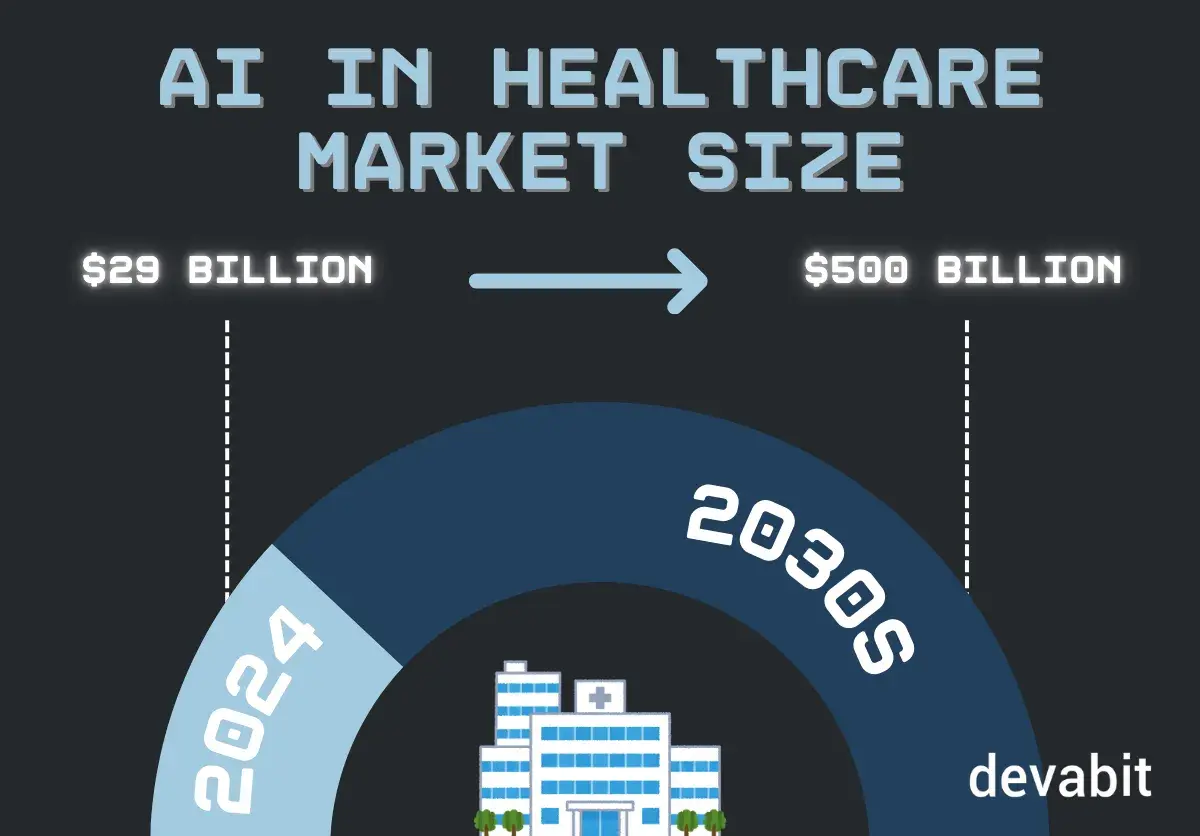
- Analysts estimate that the global AI in healthcare market was around $29 billion in 2024 and could exceed $500 billion by the early 2030s.
- At the same time, an AMA survey found 66% of physicians were already using some form of health AI in 2024, up from just 38% a year earlier.
- About 65% of US hospitals use AI-assisted predictive models, mainly to predict inpatient trajectories (92%), identify high-risk outpatients (79%), and help with scheduling (51%).
- In primary care, a UK study found nearly 30% of general practitioners already use tools like ChatGPT during patient consultations for summarizing visits and drafting text.
- North America accounts for over half (≈52.5%) of global AI-RPM spending, reflecting mature digital health infrastructure and early reimbursement support.
- A 2025 review of arrhythmia-detection wearables shows modern smartwatches, rings, and ECG patches can detect abnormal rhythms with sensitivities often above 80%, significantly outperforming older intermittent Holter monitoring strategies in simulated analyses.
Done with numbers. And with the market figures in mind, the next logical question is: where is AI used in healthcare today? From hospitals and imaging labs to pharmacies and patients' homes, AI is reshaping care at every stage. Let's decode this complex case: Where is AI used in healthcare?
Radiology & Imaging Labs
How is AI involved? — AI analyzes CT, MRI, X-ray, and ultrasound images to highlight possible strokes, tumors, lung nodules, fractures, and other abnormalities, helping radiologists prioritize urgent cases and measure changes over time. Increasingly, such AI models are deployed on scanners and workstations themselves, which is an early form of Edge AI in healthcare imaging. Read about Edge AI in healthcare right below.
Intensive Care Units (ICUs) & Operating Rooms
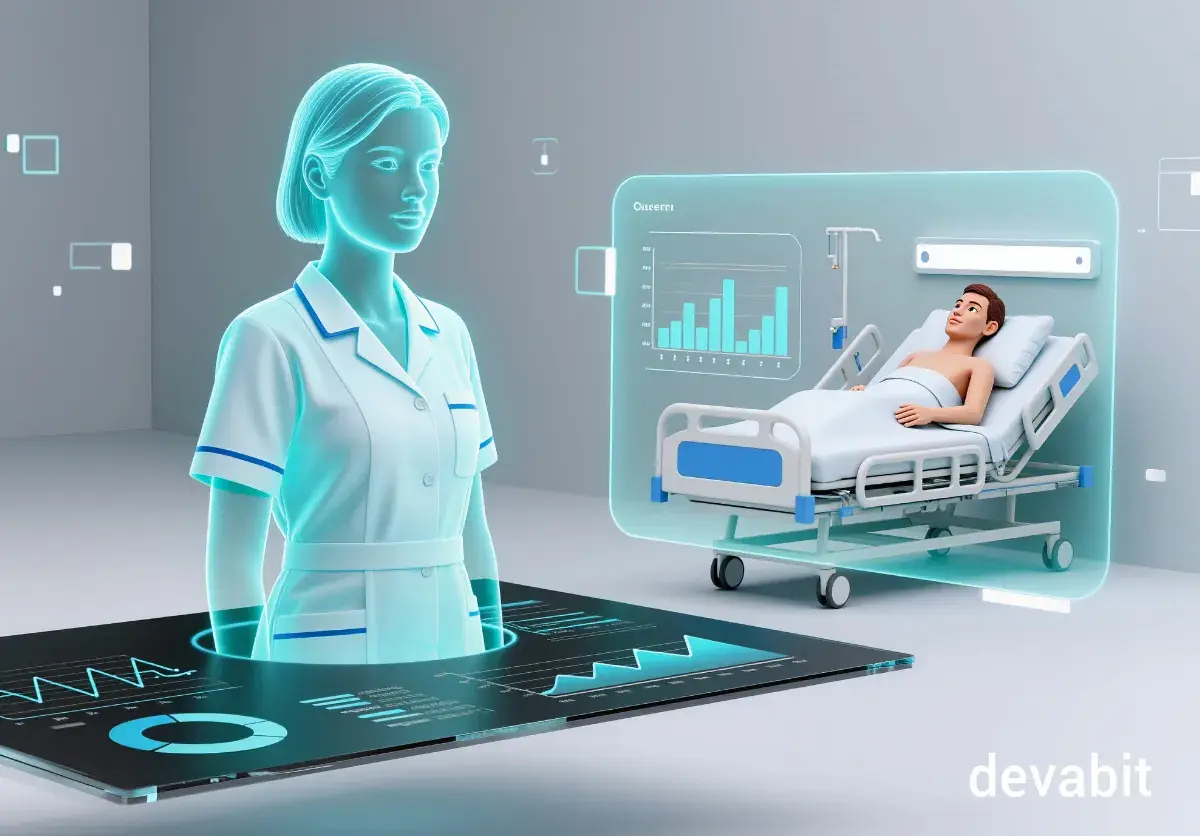
How is AI involved? — In ICUs and ORs, AI continuously tracks vital signs, labs, ventilator data, and drug infusions to predict events like sepsis, respiratory failure, or hemodynamic collapse hours in advance, and to support anesthesia and robotic or image-guided surgery.
Pharmacies & Medication Management Systems
How is AI involved? — In this case, AI powers clinical decision support that checks each prescription for allergies, drug–drug interactions, duplications, and dosing problems, and advanced systems personalize doses in areas like oncology or cardiology based on lab values, weight, kidney function, and sometimes genomics.
Remote Patient Monitoring & Wearables
How is AI involved? — For chronic conditions such as heart failure, diabetes, Parkinson's disease, or sleep disorders, AI models embedded in wearable or IoT (Internet of Things) devices, such as watches, rings, ECG patches, and glucose sensors, clean and interpret continuous data streams, then alert care teams only when something looks risky. This is a textbook Edge AI in a healthcare scenario. Read about Edge AI devices right here.
Telehealth or Virtual Care
How is AI involved? — Telehealth platforms use AI chatbots, symptom checkers, and virtual assistants that remind patients to take meds or log symptoms, and NLP models that auto-draft visit summaries for clinicians. Video visits may include AI that runs on the patient's phone, tablet, or home hub to pre-process audio and video before sending compact insights to the cloud, again hinting at the use of Edge AI devices.
It seems like we have already stumbled upon Edge AI in Healthcare a few times. But still so many questions remain unrevealed. What exactly is Edge AI in healthcare, and how does it work? What are Edge AI devices in healthcare? How do Edge AI devices work? How are Edge AI devices different from cloud-based devices? devabit is here to help you put the dots over all the i's.
What Is Edge AI in Healthcare, and How Does It Work?
In simple terms, Edge AI in healthcare means running AI models directly on or near medical devices, such as monitors, imaging systems, infusion pumps, wearable devices, ambulances, and clinic gateways, instead of sending raw data to distant cloud servers for analysis.
Tech companies, such as devabit, define Edge AI in healthcare as deploying AI algorithms on local "edge" devices, like sensors, IoT devices, or gateways, so they can process data in real time without constant cloud access.
So instead of: Device - Hospital network - Cloud - AI model - Back to device.
You get: Device - On-device AI model - Instant action/alert.
What Are Examples of Edge AI in Medical Equipment?
Even though the Edge AI in healthcare technology may seem relatively fresh, medical institutions all over the world are actively incorporating it into their everyday workflow, by utilizing such medical Edge AI devices as:
Telemedicine Hubs & Home Kits
Example: hospital-at-home tablets + connected sensors.
What Edge AI does: processes video, audio, and vital signs on the tablet or home hub, for instance, estimating breathing rate from the camera, filtering noisy BP readings, and sends only clean summaries and alerts back to the clinic, so that the experts not only receive the whole picture of the patient's current state but get the opportunity to get regular insightful reports based on their vital indicators.
Smartwatches
Example: Apple Watch–like devices with ECG (electrocardiogram) and heart rate monitoring.
What Edge AI does: continuously analyzes heart rhythm, motion, and fall patterns on the watch itself to detect arrhythmias, dangerous drops, or seizures, then only syncs essential events to the phone or cloud. This way, both the patient and the doctor can receive real-time reports about the person's critical conditions and react with zero latency. Particularly useful for disabled patients or those with chronic conditions.
Smart Wearable Medical Patches
Example: ECG or multi-parameter patches worn for days.
What Edge AI does: runs compact models on a tiny chip inside the patch to detect arrhythmias, apnea, or early deterioration in real time, while discarding artefacts and sending only flagged segments and risk scores. The usefulness range is unlimited, starting from glucose level tracking to curing heart diseases and early failure detection.
Continuous Glucose Monitors (CGMs) & Smart Pumps
Example: glucose sensors paired with insulin pumps.
What Edge AI does: predicts near-term glucose trends locally and automatically adjusts insulin delivery on the pump, triggering hypo/hyper alerts even if there's no network connection. This type of Edge AI devices is one of the most well-known and easy to access, despite its indispensable benefits.
Risk-Detection Cameras in Hospitals & Care Homes
Example: ceiling or wall-mounted vision systems in wards and nursing homes.
What Edge AI does: analyzes video at the edge (on the camera or a local box) to detect falls, unsafe bed exits, or wandering, and instantly alerts staff without streaming raw video to external servers. Thanks to such Edge AI devices, medical workers eliminate the need to spend most of their time on endless patient observation, instead receiving unmistakable real-time alerts and reacting with zero latency.
Patient Portals & Mobile Health Apps
Example: clinic-branded portals and chronic-disease apps.
What Edge AI does: runs light models on the patient's phone or browser to interpret home measurements, spot worrying trends, filter out obviously wrong readings, and personalize tips, while keeping most raw data on the device. Edge AI devices are our new pocket doctors, perfect for those who tend to worry about their sudden thumb pains but do not want to get fatal threats from Google Search ;)
How Do Edge AI Devices Work?
In order to better understand how Edge AI devices utilize the power of AI-driven software and edge hardware to help doctors diagnose, patients receive care, and systems track, let's have a look at this scheme.
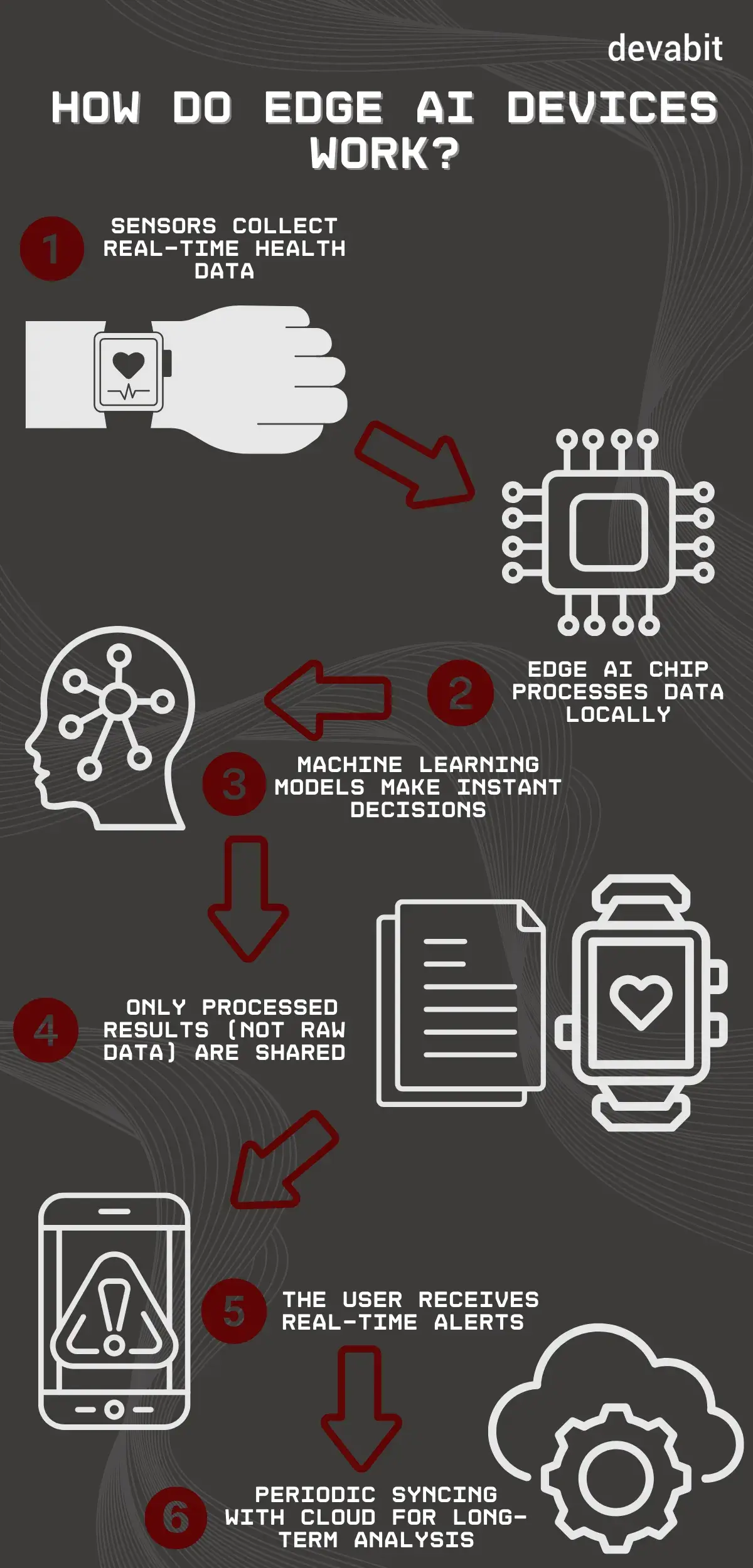
01 / Sensors capture real-time health data.
The device continuously measures signals, such as heart rate, ECG, glucose level, motion, breathing, temperature, etc. Think of a smartwatch, patch, or smart pump that is always recording new data points.
02 / Edge AI chip pre-processes data locally.
The raw signal goes straight into a small processor, like an edge chip, NPU, or MCU, inside the device. Here, the data is cleaned and compressed: noise is filtered out, artifacts are removed, and key features (trends, peaks, variability) are extracted.
03 / Machine Learning model makes an instant decision.
On the same chip, a lightweight ML model runs inference on those features. It checks: Is this pattern normal or dangerous? Does it match a fall, arrhythmia, hypoglycemia, etc.? This step happens in milliseconds, without sending data to the cloud.
04 / Only processed results are shared.
Instead of streaming all raw data, the device produces a summary:
- risk score or classification
- a few key metrics
- short segments around events
Only this compact, processed output is sent to the user's phone, hospital server, or web portal.
05 / The user receives real-time alerts.
Based on the model’s decision, the system triggers actions locally:
- a vibration or notification on the watch/phone
- an alert to a doctor or nurse
- an automatic adjustment (e.g., insulin delivery).
06 / Periodic syncing with the cloud for long-term analysis.
At scheduled times, or when connected to Wi-Fi, the Edge AI devices sync with the cloud or hospital system to:
- upload summarized histories and key events
- let clinicians review trends in portals or dashboards
- allow developers to retrain and improve models.
Healthcare Web Development & Edge AI: Revealing the Connection
As Edge AI processes data closer to where it is generated (on medical devices, wearables, or local systems), web platforms act as the intelligent interface that connects clinicians, patients, and decentralized AI insights in real time. Well-designed healthcare websites and web applications enable secure data visualization, device connectivity, and rapid decision support without relying solely on cloud infrastructure. By prioritizing performance, interoperability, and regulatory compliance, healthcare web development ensures that Edge AI delivers valuable insights while providing data privacy and a seamless user experience.
Another AI Healthcare Use: Conversational AI for Healthcare
Conversational AI in healthcare gains a new dimension when paired with Edge AI, shifting intelligent interactions closer to patients and care providers. Instead of relying entirely on cloud-based processing, edge-enabled conversational systems can analyze inputs locally, allowing faster, more reliable responses in time-sensitive situations such as remote monitoring or bedside assistance. This approach enhances privacy by minimizing data transmission while enabling voice and chat interfaces to function even in low-connectivity environments. As a result, conversational AI becomes more than a digital assistant; it evolves into a responsive, context-aware companion that supports clinical decisions, guides patients in real time, and delivers a personalized patient experience.
How devabit Can Help
As we are on the verge of 2026 innovations, we must admit that patient-centric medical care and artificial intelligence are now indivisible. And devabit, as a leading healthcare software development company, knows how to turn the ideas above into real, safe, and robust medical products. The pure symbiosis of technology, health, and profit is all about devabit solutions. We help healthcare companies, medtech startups, and device manufacturers design, build, and integrate Edge AI solutions from concept to production. Our team covers the full stack:
Product & Architecture Consulting
We analyze your unique case, such as a telemedicine kit, wearable, smart patch, imaging device, etc., define what should run on the edge vs in the cloud, and design a scalable, secure architecture, utilizing only proven tech stacks and dedicated developers with years of experience behind.
AI & Data Science for Edge Devices
We build and optimize Machine Learning models that can run on constrained hardware: quantization, pruning, model compression, and adaptation to NPUs/MCUs used in medical devices.
Edge Integration
We integrate AI models into wearables, home hubs, medical patches, monitoring stations, and gateways, making sure they work reliably with sensors, batteries, and connectivity limits, all within your budget opportunities and deadline limitations.
Telemedicine & Patient-Centric Applications
At devabit, we develop telehealth platforms, clinician dashboards, and patient mobile apps and web portals that visualize Edge AI results, provide alerting, and can integrate with your existing HIS/EHR systems.
Cloud, Interoperability & Security
Our custom healthcare software development company can set up APIs and cloud backends for periodic syncing, long-term analytics, and fleet management, following healthcare security best practices and interoperability standards.
Quality, Validation & Long-Term Support
devabit can also help your company structure testing, monitoring, and updates for your Edge AI solution, so it can be validated, audited, and safely improved over time. Even for outdated solutions or those that experienced severe data loss.
And in case you haven't found the exact service or solution type you seek, just contact us and get a free quote on how devabit can help asap!
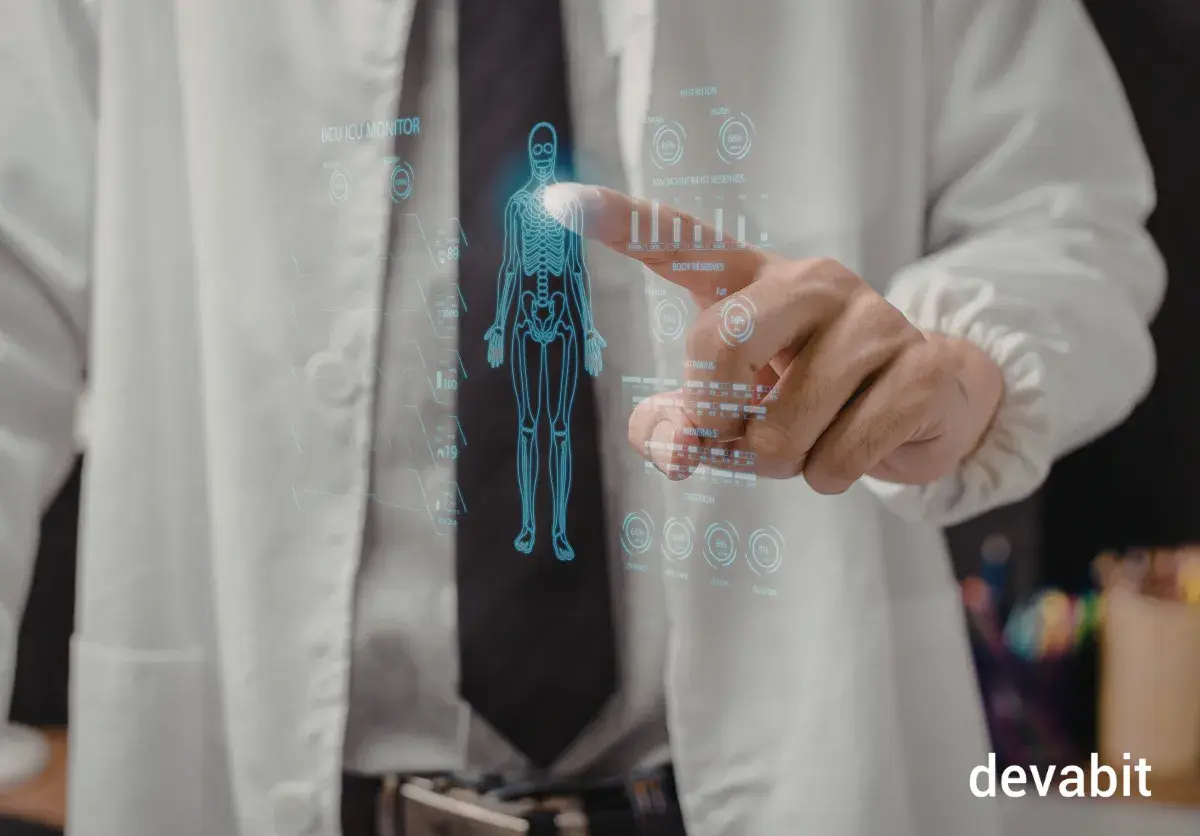
Edge AI in Healthcare: A Cure for All Diseases?
Edge AI is transforming healthcare by bringing real-time decision-making to medical devices, wearables, and telemedicine platforms. That innovation shift is not only about productive work in low-connectivity environments, but about bringing the desired relief and reliability into patient-centric medical care. Edge AI devices serve as an instant bridge between doctors desiring to deliver top-notch help and patients seeking an unmatched level of care. From AI-powered imaging in radiology labs to remote monitoring in patients' homes, Edge AI devices enable faster, more personalized care while minimizing the strain on cloud resources or human reactions.
The edge technology enhances everything from early diagnosis and risk detection to medication management and remote patient monitoring. And it is an absolute loss to neglect AI-driven medicine in the era of virtual care, slowly substituting the personal one. At devabit, we are dedicated to helping healthcare organizations harness the power of Edge AI. Whether you seek to integrate AI models into edge devices, develop telemedicine solutions, or build secure, scalable systems, we provide end-to-end healthcare software development services that bring the future of healthcare closer to today’s realities. Contact Us if you want us to help you turn your vision into reality that revolutionizes medicine, not tomorrow, but today.
Recent Publications
Don't miss out! Click here to stay in touch.
More of Edge AI Content

Relevant Articles View all categories
View all categories CONNECT WITH US WE’RE READY
TO TALK OPPORTUNITIES
THANK YOU! WE RECEIVED YOUR MESSAGE.
Sorry
something went wrong